|
Blue Stinger
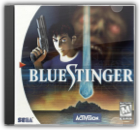
As Eliot or Dogs Bower, a ferry captain Eliot meets early in the game, you explore the island and uncover the story behind the disaster. While most of the game focuses on solving puzzles and learning more about the meteor and its effect on the island, roaming zombies and huge monsters will keep you on your toes. Graphics are good—with nice flashy weapons effects—but not mind-blowing like Soul Calibur or Sonic Adventure. The Jump Pack accessory (sold separately) provides great tactile feedback when firing weapons or getting mauled by a monster—it seems to spend more time rumbling than not. While the fighting is a lot of fun, some players may be frustrated by the regeneration of zombies. It can get tedious to exit a room after killing all of the enemies, only to run into them again when returning. The game's viewpoint system also could be improved, as it occasionally leaves you fighting an enemy you can't see. Parents should note that Blue Stinger is a horror game, and the gore flows readily. All in all, while it doesn't build any new genres, Blue Stinger provides a solid gaming experience. Its flaws keep it from being a great game, but don't keep it from being a good time. —Aaron Karp Pros:Long gameplayInvolved science-fiction/horror storylineGood balance between puzzles and actionCons:Occasionally awkward viewpoint systemRepetitive enemy encounters Crazy Taxi
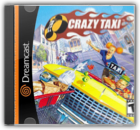
What's so hot about Crazy Taxi? For starters, the graphics sport the most impressive re-creation of a living city ever seen in a video game. The level of detail is astounding and never ceases to surprise the player as block after unique block speeds by. The city is a distilled version of San Francisco with some landmarks and neighborhoods left intact. Making it seem all the more real are apparent product placements of real-world retail locations such as KFC, Tower Records, and Pizza Hut. And just about everything you see on the screen is interactive: boxes, phone booths, and mailboxes topple when bumped or smashed, pedestrians leap and tumble out of your path, and the myriad of traffic attempts to avoid your erratic high-speed antics. While some driving games brag about a lack of boundaries, this one delivers—players drive on the ocean floor, off the second floor of a parking garage, through parks, and down stairs. A helpful hovering arrow points drivers in the correct direction, but you can truly drive wherever you want at any time, making for tons of replay value. While the game is a direct port from the arcade game of the same name, there's plenty more depth in the home version. In addition to the city that appears in the coin-op version, the Dreamcast version also includes an entirely new city. Crazy Taxi includes a trunk-load of mini-games that help to teach drivers how to perform the special speed boosts and maneuvers in the game. Though this game would be plenty exciting without any sounds at all, it has an adrenaline-pumping soundtrack supplied by punk crossover bands the Offspring and Bad Religion, as well as some good, if sometimes monotonous, dialogue between the driver and the passengers. —Jeff Young Pros:Wonderful, realistic graphicsEasy to get into, and full of many long hours of addictive playEven more to offer than the fantastic arcade game upon which this is basedCons:On very few occasions players will encounter some graphic slowdown NFL 2K

Plasma Sword

The game is set in the future, with neo-cities, dead planets, and outer space filling the backgrounds. The characters range from cyborgs to lone swordsmen, each with a slightly altered double. Characters can use pent-up energy to perform superpowerful plasma combos that are a visual treat. For those familiar with fighting games, Plasma Sword's controls should be a quick study, while those not familiar with fighting games can switch to easy mode, which lets you perform special moves with just one button. Like other fighting games, this game centers on brawling, yet it isn't as violent as Mortal Kombat or Wu-Tang: Shaolin Style. One drawback of Plasma Sword is that graphics are rendered in 2-D as opposed to more cutting-edge 3-D fighters like Namco's must-own Soul Calibur. Still, for a game with slightly dated graphics, it's a solid fighting game. —Robb Guido Pros:22 characters each with his or her own plasma weaponSpecial-effect enhanced plasma combosCons:Mainly for fans of fighting gamesNot as complex as other Capcom fighters, for better and for worse Ready 2 Rumble Boxing
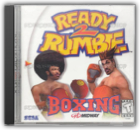
By far, the best feature of the game is the variety of boxers—20 in all—representing a range of personalities and abilities. Afro Thunder, for example, is a trash-talking, Chris Rock-sounding fighter with a repertoire of ring speed, quick jabs, and over-the-top hooks, while Butcher Brown is a heavy-handed thug built like a dump truck. There's something for everyone, with many nationalities, genders, and fighting styles represented. Since each fighter has different speed, reach, and moves, there is a pleasant amount of depth to the game. Ready 2 Rumble offers two different game modes: Arcade and Championship. Arcade mode is for one or two players, and is simply a series of boxing matches. The single-player option pits you against a computer-controlled opponent, while the two-player format lets you and a buddy hammer it out. Championship mode puts you in charge of your own boxing gym. You start the game with three rookie fighters, facing off in second-rate gyms, and it's your job to train them in hopes of reaching the championship bout. Championship mode also lets you access Ready 2 Rumble's most innovative feature: the ability to pit your prized fighters against boxers from a friend's gym through the Visual Memory Unit. Just save your stable of boxers onto the VMU and then use it in a buddy's Dreamcast, where you can fight an exhibition match against one of his or her boxers, or arrange a trade. The VMU also lets you save your progress. Without it, all your boxers (and all the secret characters you've managed to unlock) are erased when you turn off the console. But then again, if you've got Ready 2 Rumble, it's unlikely that you'll turn off the console anytime soon. —Mike Fehlauer Pros:Impressive graphics and boxer animationsVariety of personable, quirky, fun boxersEasy-to-learn controlsGreat use of peripherals (VMU and Jump Pack)Cons:Punch combinations can be slow Rippin' Riders
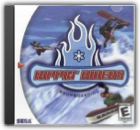
Armed with a glossary in the form of a user manual, players will soon be able to talk the talk. But in this game, walking the walk, or rather pulling the tricks, requires quite a bit of controller dexterity. Luckily the game is not based solely on snowboarding tricks, but also has a healthy dose of racing at its core. What makes this game stand out is the length and detail of each downhill course. Jumping off the roof of sheep farms, avoiding falling icicles, and catching the spotlight of a hovering helicopter are all in a day's play in Rippin' Riders—and that's just the first track! A unique two-player mode challenges players to shrink the opponent's split screen by outscoring him or her. Track graphics are up to snuff, but the players look a bit chunky. —Jeff Young Pros:Outstanding course design with plenty of details and multiple checkpointsGroovy outfits and snowboards for each characterCons:Many of the tricks are difficult to executeYou never see other racers on the course, except in multiplayer mode Shenmue
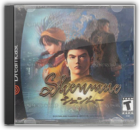
The game itself is awash in small details, crammed into a confined space. The city of Yokusuka circa 1986 is rendered beautifully in a short series of neighborhoods that are long on detail even if short on variety. The story itself is ripped straight from a chopsocky flick: you portray the young hero Ryo Hazuki, whose father (a kung fu sensei, naturally) is killed before his very eyes by a mysterious and frightening villain. Ryo must uncover the identity of the killer and fight his way through the city in an effort to avenge this wrongful death. Shenmue's Yokusuka might be short on space—in total, it represents maybe a square mile—but the detail is overwhelming. You can interact with nearly every person or object that you see; 300 citizens go about their daily routines, and whom you encounter is as much determined by where you are as when you are there. Much of this interaction involves combat that ranges from Dragon's Lair-style reaction tests (such as timing a button press to dodge an oncoming car) to freeform kung fu fighting. Further, each second of real time equals about a minute of game time, and Ryo has to be home by 11 p.m. each evening. The game moves at a brisk pace, and each challenge or battle feels like a race against time. Some might say that gaming doesn't get shallower than this (you are essentially performing tasks and exploring, instead of gaming), but the game feels like no other and is ultimately satisfying by the time that it all ends. In this way, Shenmue is more than a game—it's an event that's worth experiencing. —Andrew S. Bub Pros:Compelling, well-told storyGood action and combatFantastic sound and graphicsCons:Plot is familiar to fans of kung fu action filmsTask-and-exploration gameplay might seem slow to action gamers Sonic Adventure
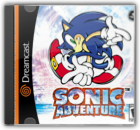
Our favorite level is Windy Valley, which requires you to survive the stormy perils of a tremendous tornado. This tyrant of nature chases you relentlessly before ultimately sucking you into the air and up through its eye. During the chase, the tornado manages to tear up just about everything on the screen. This dizzying visual spectacle moves so fast that you will literally hold on to the game controller for dear life. Assuming you survive the tornado, there are several more challenging areas to conquer, including a level that requires you to snowboard directly in the path of a fast-approaching avalanche. During the Emerald Coast level, you will race across a precarious dock as a killer whale attacks from below, destroying the wood planks underneath your feet while you attempt to outrun the crazed creature. We also liked the numerous mini-games scattered throughout this title. When you least expect it, Sonic Adventure tosses in some old-fashioned arcade action, such as pinball or bumper car racing. In between, you can raise virtual pets, known in the game as "Chao." These characters, which are saved using the optional Visual Memory Unit (VMU), can be combined with other Chao characters exchanged between friends or downloaded via the Internet. Gamers looking to show off the strong processing power of the 128-bit Dreamcast will definitely want to pick up this title. Simply put, Sonic Adventure's graphics surpass those of any other game currently available on any home video game system. Let the Sonic assault begin. —Brett Atwood Pros:Strong replay valueStunning graphicsBonus virtual pet gameSix different game characters Cons:May be too fast-moving for some playersAwkward camera angles can inhibit gameplay in some areas Sonic Adventure 2
Soul Calibur
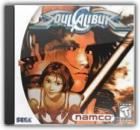
Pros:Exceptionally lifelike graphics and animationMultiple game modes—1-player, 2-player, team, computer vs. computer, martial arts demo, and moreSecrets and extra features will keep players coming backCons:May be too violent for some parents Tokyo Xtreme Racer

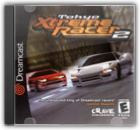
Wonder no more. Tokyo Xtreme Racer delves into the world of highway racing featuring customized Japanese autos. The basic premise: cruise the Tokyo highway until you find someone who looks a bit too cocky, flash your lights to signal your racing intentions, and commence speeding. The racing physics in the game aren't perfect and the graphics may not bowl you over, but TXR is a lot of fun and it can be a very deep game for dedicated players. There are hundreds of prospective opponents, and plenty of ways to upgrade your car, but the one element that will no doubt turn off American racing gamers is that there's only one track for the entire game. If you can handle that, and the lack of any apparent damage from collisions, then TXR is good fun. —Jeff Young Pros:High replayabilityImpressive replaysUnique concept and designCons:Only one trackGraphics are nice, but don't push the Dreamcast's capabilities Tokyo Xtreme Racer 2
Trickstyle
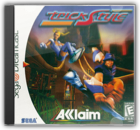
Still, this game looks so darn cool, you can't resist playing it. The requisite tricks from snowboarding games are here, but this time they actually add important power-ups to your repertoire, favoring function over, dare we say, style. To save yourself the frustration of trying to consistently win races, you should enjoy this game by watching the screen while other more nimble or less leisure-time-deficient friends play. —Jeff Young Pros:Jaw-dropping graphics and animationFunctional board tricksContemporary stylingCons:Difficult racetracksUnrealistically skilled computer opponentsNeed to place first in order to progress WWF Attitude

|


Steve Pfisterer
Collection Total:
704 Items
704 Items
Last Updated:
Dec 12, 2011
Dec 12, 2011
 Made with Delicious Library
Springfield, State zipflap congrotus delicious library Pfisterer, Steve